Things to Do in Kastellorizo: Complete Island Guide
Kastellorizo is one of Greece’s smallest and most remote inhabited islands, sitting at the eastern edge of the Dodecanese close to the Turkish coast.
Also known by its ancient name Megisti, the island covers only around nine square kilometres. Yet Kastellorizo packs an extraordinary amount into such a small area: colourful neoclassical houses, a spectacular natural harbour, ancient ruins, a medieval castle, museums, walking trails and one of Greece’s most impressive sea caves.
This isn’t an island for travellers looking for beach clubs, nightlife or enormous resorts.
Kastellorizo is somewhere to slow down.
Walk around the harbour. Take a boat to the Blue Cave. Climb into the hills. Swim from the rocks. Eat seafood beside the water and watch the harbour change colour as the sun goes down.
Here are the best things to do in Kastellorizo.
1. Explore Kastellorizo Harbour
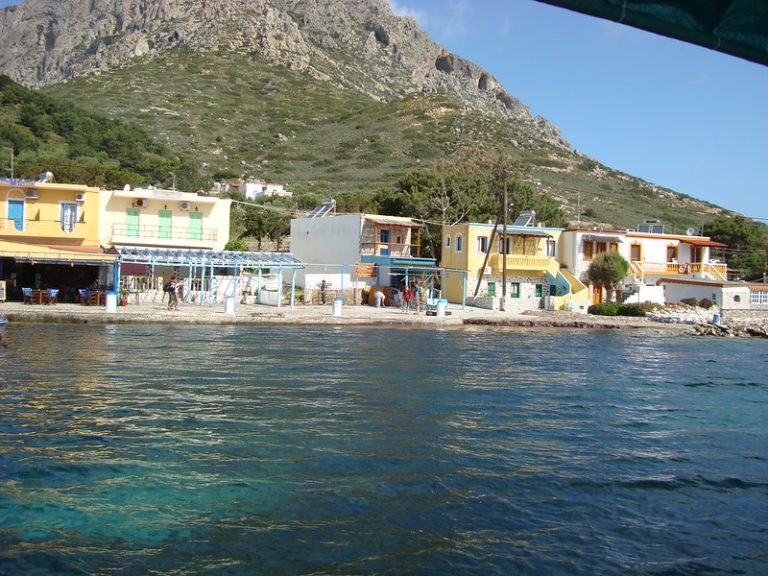
The harbour is the heart of the island and one of the main reasons to visit Kastellorizo.
Colourful two- and three-storey neoclassical mansions line the waterfront, their façades reflected in the remarkably clear harbour water. Visit Greece describes the harbour’s red, yellow, blue and green houses as one of Kastellorizo’s defining sights.
You don’t really need an itinerary here.
Walk along the waterfront.
Stop for coffee.
Watch fishing boats and ferries arrive.
Look across the narrow stretch of sea towards the Turkish coast.
Return again in the evening when the light changes.
Because Kastellorizo is so small, you’ll probably walk around the harbour dozens of times during a stay.
That’s part of its charm.
2. Take a Boat to the Blue Cave
If you do only one excursion on Kastellorizo, make it the Blue Cave.
Located on the southern side of the island and accessible only by boat, this spectacular sea cave is one of Kastellorizo’s best-known natural attractions.
The municipality also refers to it as the Hole or Fotsaliki, while other sources use the names Cave of Parastas and Fokiali. Light entering the cave produces the extraordinary blue illumination that gives it its familiar name.
Small boats make the excursion from the harbour.
Because access depends on sea conditions, I’d try to do the Blue Cave early in your stay rather than leaving it until your final day.
That gives you another opportunity if conditions aren’t suitable.
3. Climb to the Castle of the Knights
Above the harbour stand the remains of the medieval castle that helped give Kastellorizo its modern name.
The Knights of St John rebuilt the fortress during the Middle Ages on an earlier fortified site. The name Castello Rosso — Red Castle — eventually evolved into Kastellorizo.
Today the ruins provide another perspective over the harbour and settlement.
It’s particularly worthwhile if you enjoy photography because the elevated position lets you appreciate just how compact Kastellorizo really is.
4. See the Lycian Tomb
Near the foot of the castle is one of Kastellorizo’s more unusual archaeological remains.
The Lycian Tomb is a rock-cut tomb dating from around the 4th century BC.
Its presence is a reminder of Kastellorizo’s geographic position.
Although the island is Greek, the coast of ancient Lycia in modern Turkey lies remarkably close across the water, and Kastellorizo’s history has always been influenced by its location between the Aegean and Asia Minor.
It’s easy to combine the tomb with a visit to the castle.
5. Visit the Archaeological Museum
For such a small island, Kastellorizo has a remarkably long history.
The Archaeological Museum, situated beneath the castle, helps put everything you see around the island into context.
Its collections cover ancient Megisti, the Early Christian and Byzantine periods and more recent island life, including traditional 19th-century clothing and household objects.
I’d visit relatively early in your stay.
Understanding Kastellorizo’s history makes the ruins, churches and old houses considerably more meaningful afterwards.
6. Visit the Folklore Museum
Kastellorizo’s Folklore Museum occupies the island’s former Ottoman mosque.
The museum provides another perspective on the island’s more recent history and traditional way of life.
Together, the Archaeological Museum and Folklore Museum tell a surprisingly complicated story for an island that today feels so quiet.
7. Climb to Agios Georgios tou Vounou
For one of the best walks on Kastellorizo, climb into the hills to Agios Georgios tou Vounou — Saint George of the Mountain.
The municipality describes a climb of roughly 400 steps to the monastery, which dates from 1759. Inside is the catacomb of Agios Charalambos and a small spring.
The climb is exposed, so in summer I’d avoid doing it during the hottest part of the afternoon.
Go early in the morning or later in the day, take water and wear decent footwear.
The views are part of the reward.
8. Explore Palaiokastro
Kastellorizo’s history extends much further back than its picturesque harbour suggests.
Palaiokastro was the ancient acropolis of Megisti and dates to around the 4th century BC. The fortifications were subsequently altered during the medieval period, while later churches, military installations and wartime damage reveal successive chapters of the island’s history.
For travellers interested in archaeology, this is one of Kastellorizo’s most worthwhile places away from the waterfront.
It also gives you an excuse to explore the island’s interior rather than spending the entire visit beside the harbour.
9. Go Walking
Kastellorizo is an excellent island for walking.
It’s tiny, relatively undeveloped and criss-crossed by paths connecting historic sites, churches and viewpoints.
The municipality specifically promotes the island’s walking trails and notes that detailed walking maps are available locally.
You don’t need to undertake an epic hike.
Even a couple of hours walking away from the settlement reveals a completely different side of Kastellorizo.
Take plenty of water and avoid exposed routes around midday during summer.
10. Swim in Kastellorizo’s Clear Water
Here’s something worth knowing before you book Kastellorizo:
Don’t come expecting long sandy beaches.
Visit Greece specifically notes that the island has no sandy beaches, with swimming instead taking place from rocks and small piers into deep, clear water.
That doesn’t mean Kastellorizo is bad for swimming.
Quite the opposite.
The water can be beautiful.
But the experience is different from islands such as Naxos or Lefkada.
If conventional beaches are an essential part of your Greek holiday, Kastellorizo may work better as one component of a longer Dodecanese trip.
We’ll explain the swimming options properly in our separate Best Beaches and Swimming Spots in Kastellorizo guide rather than pretending the island has beaches it doesn’t have.
11. Take a Boat Trip Around the Island
The Blue Cave isn’t the only reason to get onto the water.
A boat trip allows you to see Kastellorizo’s rocky coastline from a completely different perspective and reach swimming spots that aren’t practical to access on foot.
Ask at the harbour about excursions available during your stay.
Conditions and services can change, so this is one occasion where asking locally is better than planning every detail months in advance.
12. Visit the Islet of Ro
One of the most interesting excursions from Kastellorizo is Ro.
The tiny island is closely associated with Despoina Achladioti, better known as the Lady of Ro, who lived there for decades and became famous for raising the Greek flag each day.
She died in 1982, and a monument on Ro commemorates her.
Ro adds another layer to understanding why Kastellorizo and its surrounding islands have such significance within modern Greece despite their tiny populations and remote location.
Ask locally about boat excursions because access is naturally dependent upon available services and sea conditions.
13. Look for Kastellorizo’s Sea Turtles
Spend enough time around the harbour and you may notice you’re not the only one swimming there.
Sea turtles are frequently associated with Kastellorizo’s harbour waters.
Rather than chasing or attempting to touch wildlife, simply watch from the waterfront if one appears.
The harbour is so clear that observing marine life can become one of those unplanned pleasures of staying on the island.
14. Discover Kastellorizo’s Churches
For such a small island, Kastellorizo has numerous churches and chapels scattered around the settlement and hills.
You don’t need to turn them into a checklist.
Instead, you’ll naturally encounter them while walking.
Some are worth visiting for their architecture; others are interesting mainly because of their setting.
Together with the castle, tombs and abandoned fortifications, they contribute to the feeling that virtually every corner of Kastellorizo contains another piece of its history.
15. Find the Sculptures Near Megisti Hotel
This is a more unusual attraction.
The municipality highlights a collection of sculptures created by Alexandros Zygouris, an artist who has lived on Kastellorizo for decades.
The sculptures can be found along a small path near Megisti Hotel, with an associated workshop nearby.
It’s a nice example of the small discoveries that make walking around Kastellorizo rewarding.
16. Eat Beside the Harbour
Food deserves time in a Kastellorizo itinerary.
The island has a surprisingly healthy selection of restaurants for its size, with seafood and Greek cooking naturally dominating.
Current restaurant listings confirm long-established choices including Alexandra’s, Ta Platania, Old Story – Old Time, Lazarakis Restaurant and Billy’s. Tripadvisor’s current Kastellorizo listings also show these among the island’s active dining choices.
We’ll deal with those properly in Best Places to Eat in Kastellorizo, rather than stuffing a restaurant guide into this page.
For now, I’d simply allow plenty of time for long lunches and waterfront dinners.
How Long Do You Need in Kastellorizo?
You can see the main sights quickly.
But that’s missing the point.
I’d suggest 3–4 nights for most travellers.
That allows something like:
Day 1: Harbour, castle, Lycian Tomb and museums
Day 2: Blue Cave, swimming and boat exploration
Day 3: Agios Georgios, Palaiokastro and walking
Day 4: Ro or another boat/swimming day
It also gives you some flexibility if sea conditions prevent a Blue Cave trip on your first attempt.
Do You Need a Car in Kastellorizo?
For most visitors, no.
The island is tiny and walking is one of the pleasures of visiting.
A car would add relatively little to a short stay centred around the harbour, particularly if you’re comfortable walking.
For more distant places, combine walking with boats or locally available transport where appropriate.
Is Kastellorizo Worth Visiting?
Absolutely — but for the right traveller.
Kastellorizo isn’t trying to compete with Santorini, Rhodes or Mykonos.
There aren’t dozens of beaches, huge resorts or endless attractions.
Instead you get an extraordinarily picturesque harbour, fascinating history, clear water, walking, seafood, the Blue Cave and the unusual experience of staying on one of Greece’s most remote islands.
Visit Greece describes Kastellorizo as remaining largely untouched by mass tourism.
That’s probably its greatest attraction.
Final Thoughts
Kastellorizo demonstrates that a Greek island doesn’t need to be large to justify several days of exploration.
Start with the harbour.
Take a boat into the Blue Cave.
Climb to the castle and Agios Georgios.
Explore Palaiokastro.
Swim from the rocks.
Eat beside the water.
Then slow down enough to appreciate why people travel all the way to the eastern edge of Greece to stay here.