Things to Do in Leros: Beaches, History & Island Experiences
Leros is easy to underestimate.
It doesn’t have the international profile of Rhodes, the nightlife of Mykonos or the instantly recognisable villages of Santorini. What it does have is an unusual combination of quiet beaches, traditional settlements, dramatic Second World War history and one of the most distinctive architectural landscapes in the Greek islands.
Leros sits in the northern Dodecanese between Patmos and Kalymnos. Its deeply indented coastline creates natural harbours and sheltered bays, while settlements including Panteli, Agia Marina, Platanos, Alinda and Lakki each have noticeably different characters. Greece’s official tourism organisation describes the island as retaining a relatively low profile, with crystalline water, significant history and architecture shaped particularly by the Italian occupation.
That makes Leros especially suitable for travellers who enjoy exploring rather than simply ticking off one famous attraction.
Here are the experiences I would prioritise.
1. Visit the Castle of Panagia
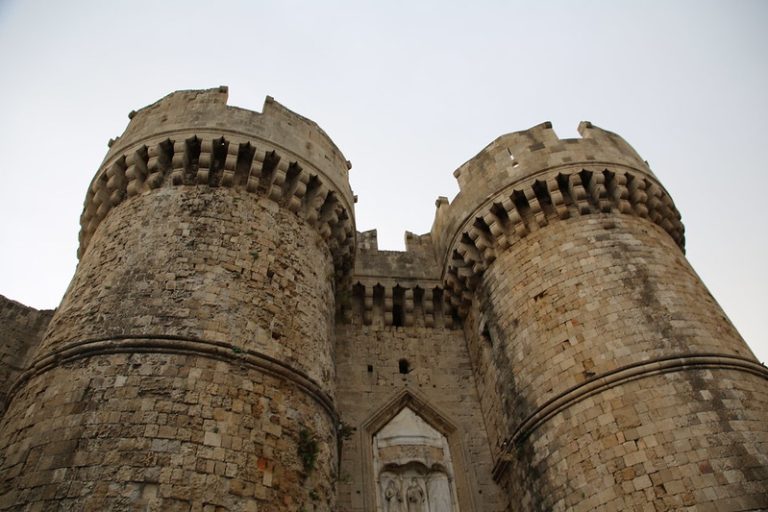
The Castle of Panagia, also known as Panteli Castle, is one of the essential sights on Leros.
Standing roughly 200 metres above sea level on Apitiki Hill, the fortress overlooks Platanos, Agia Marina, Panteli and a large section of the surrounding coastline. Within the fortifications is the Church of Panagia, which holds particular religious significance for the island.
The setting is at least as important as the buildings themselves.
From the castle you begin to understand Leros geographically: settlements wrap around different bays, hills divide parts of the island, and the coastline twists into natural harbours.
You can reach the area by road, but there is a much more atmospheric option for walkers. From Platanos, a footpath of approximately 500 steps climbs toward the castle.
Allow time rather than treating the castle as a quick photograph.
Best for: history, views, photography and first-time visitors.
2. Walk Through the Windmills Above Panteli
The ridge between Platanos and the castle is dotted with traditional windmills, creating one of Leros’s most recognisable landscapes.
They work particularly well as part of the castle visit rather than as a completely separate excursion.
Explore Platanos, make your way uphill through the windmill area and continue toward the castle. Afterwards, descend toward Panteli for a swim or dinner.
That produces one of the best half-days on Leros because it combines several aspects of the island without requiring much driving.
Best for: views, walking and photography.
3. Explore Lakki’s Extraordinary Italian Architecture
Lakki may be the biggest surprise on Leros.
During the Italian occupation of the Dodecanese, the Italians developed the settlement as Portolago, associated with the major naval base they established around Lakki’s enormous protected harbour.
Rather than expanding an existing Greek village in the usual way, they planned a new town using Italian Rationalist and modernist architectural ideas.
Buildings included a market and clock tower, hotel, municipality, customs house, school, church and housing complexes. Local architectural records describe Portolago as an unusually complete example of Rationalist planning incorporating modernist, Bauhaus and industrial influences.
Today the town is called Lakki.
Some travellers initially find it strange because it doesn’t conform to expectations of what a Greek island town is supposed to look like.
That’s precisely why it’s worth exploring.
Don’t visit Lakki only because your ferry arrives there. Walk around and look at the buildings.
Best for: architecture, history, photography and travellers interested in unusual places.
4. Visit the War Museum Tunnel at Merikia
The War Museum Tunnel at Merikia is one of the most important places for understanding why Leros looks the way it does.
Italy developed Leros as a major eastern Mediterranean naval base, and the island subsequently became the scene of intense fighting during the Second World War.
The museum occupies a restored military tunnel. Its collection includes photographs, maps, models and objects recovered around Leros and from the surrounding sea, while the exterior museum area contains military vehicles and other equipment.
This isn’t simply a collection of military memorabilia.
It provides context for the tunnels, gun positions, abandoned installations and wrecks that you’ll encounter elsewhere on the island.
I’d visit it before exploring some of Leros’s other wartime remains.
Best for: WWII history and understanding modern Leros.
5. Discover the Story of the Battle of Leros
Leros played an extraordinary role during the Second World War.
Following Italy’s armistice with the Allies in September 1943, German forces fought to capture the Italian-held Dodecanese. Leros became the scene of the Battle of Leros, involving Italian and British defenders and German air and ground forces.
The legacy isn’t confined to a museum.
Military tunnels, batteries, fortifications, buildings and wrecks remain scattered around the island. Greece’s official tourism organisation now promotes Leros particularly for this combination of naval history and underwater wrecks.
Even travellers with little interest in military history will benefit from understanding this period because it explains so much of Leros’s unusual landscape.
6. Dive Among Second World War Wrecks
For qualified divers, Leros offers something exceptional.
The surrounding seabed contains ships and aircraft associated with the Second World War and particularly the Battle of Leros.
Greece’s official tourism organisation identifies eight visitable wrecks, including the Greek destroyer Vasilissa Olga, a Junkers Ju 52 aircraft, an Arado Ar 196 and a Heinkel He 111 near Blefoutis. An organised diving centre operates from Agia Marina, with training also available for beginners.
This gives Leros an unusual tourism niche.
You don’t need to be an experienced wreck diver to appreciate the significance of the underwater landscape, but anyone specifically interested in historical diving should put Leros much higher on their Greek-island list.
Best for: experienced divers, history enthusiasts and adventurous travellers.
7. Spend an Evening in Panteli
Not everything on Leros needs to be an attraction.
Panteli is one of the places where simply being there is worthwhile.
The small fishing harbour, beach, boats and waterfront tavernas make it particularly appealing late in the day.
Swim during the afternoon, walk around the waterfront and stay for dinner.
This is also why we recommended Panteli so highly in our accommodation guide: staying here allows the village itself to become part of the holiday rather than somewhere you repeatedly drive to.
Best for: couples, swimming, restaurants and relaxed evenings.
8. Explore Agia Marina and Platanos
Agia Marina and Platanos form part of Leros’s traditional heart.
Agia Marina spreads from its harbour toward the foot of the castle hill, with narrow streets, traditional houses and substantial neoclassical mansions. Local tourism information also identifies the remains of the Byzantine Bourtzi fortress at the harbour entrance and an archaeological collection among the area’s sights.
Platanos sits immediately inland and provides the natural starting point for walking toward the windmills and Castle of Panagia.
Don’t treat these settlements simply as roads between attractions.
Spend some time walking.
Leros’s traditional and neoclassical architecture contrasts sharply with the Rationalist buildings at Lakki, and seeing both helps explain the island’s unusually layered history.
9. Have a Proper Beach Day at Alinda
Alinda provides one of the easiest beach days on Leros.
It’s a good choice when you don’t want an itinerary at all: swim, find lunch, return to the water and stay around the coast.
This also makes Alinda particularly useful for families and anyone spending a longer period on the island.
Leros isn’t about one universally agreed “best beach”. Its strength is the ability to choose among numerous bays and swimming spots depending on where you are and what conditions are like.
For much more detail, see our Best Beaches in Leros guide.
10. Beach-Hop Around the Island
Once you’ve had an easy day at Alinda or Panteli, use another day to explore.
Vromolithos provides a quieter alternative close to Panteli.
Gourna offers darker sand and shallow water on the western side.
Blefoutis gives you a reason to explore northern Leros.
Xirokampos works well as part of a southern-island excursion.
And Krifos, accessible by boat, provides a more secluded experience.
Leros has around 71 kilometres of highly indented coastline, with numerous bays and coves rather than one continuous resort coast.
That makes a car or scooter useful if beach-hopping is important to you.
11. Visit Agios Isidoros
The tiny church of Agios Isidoros is one of Leros’s most photogenic coastal sights.
It sits offshore and is reached by a narrow causeway, creating a simple but striking scene against the sea.
I’d combine it with Gourna and the western side of Leros rather than crossing the island solely for a photograph.
It’s particularly appealing toward the beginning or end of the day when you can spend some time enjoying the setting.
Best for: photography, scenery and a western Leros drive.
12. Explore Northern Leros
Many visitors concentrate on the interconnected settlements around Alinda, Agia Marina, Platanos and Panteli.
Having a vehicle gives you the opportunity to go farther north.
Blefoutis provides a beach stop, while Partheni and the surrounding area reveal more of Leros’s history and landscape.
This part of the island also contains one of its more unusual modern historical sites: the small church of Agia Matrona at Kioura, whose wall paintings were created by political prisoners during Greece’s military dictatorship. Local heritage material identifies both the church and the nearby Partheni camp complex as sites of historical memory.
This is another reminder that Leros’s history didn’t end in 1945.
13. Explore Southern Leros and Xirokampos
A separate day can be devoted to southern Leros.
Xirokampos provides swimming and tavernas, but getting there is part of the experience because you’re moving away from the island’s principal visitor settlements.
Walkers can also explore routes through the southern landscape. Local hiking information describes a Lakki–Xirokampos route passing former Italian military infrastructure and continuing toward Paleokastro.
You don’t necessarily need to complete a formal hike.
The more important idea is to avoid spending your entire visit travelling only between Panteli and Alinda.
14. Walk Part of Leros
Leros’s relatively modest hills make walking a realistic part of exploring the island.
One obvious walk is the climb from Platanos toward the castle.
More ambitious routes connect settlements and pass historical remains, churches and military sites. The island’s tourism material documents routes including Lakki to Xirokampos as well as approaches to the Castle of Panagia.
Summer heat changes the equation considerably.
For longer walks in July and August, start early, carry water and avoid treating a midday road walk as if it were a cool-weather hiking route.
15. Explore Leros From the Water
Leros’s coastline makes much more sense from a boat.
Numerous protected bays, narrow headlands and coves create opportunities for swimming stops and coastal exploration. The same natural-harbour geography that made Leros strategically important historically now makes it attractive for sailing and boating; Visit Greece specifically highlights the island’s calm harbours.
A boat day also gives you access to places such as Krifos that aren’t reached normally by road.
For travellers already visiting several Dodecanese islands, arriving and departing by ferry provides part of this experience, but a smaller boat lets you interact with the coastline much more closely.
16. Eat Something Specifically Lerian
Don’t allow every meal to become generic Greek-island food.
Leros has its own culinary traditions, including local mizithra, fish dishes, pies, almond sweets, soumada and the island’s unusual association with guava.
We’ve covered these properly in our Best Places to Eat in Leros guide, along with restaurants around Panteli, Agia Marina, Alinda, Lakki and Xirokampos.
Even if food isn’t the main reason for visiting, try at least a few things connected specifically with the island.
That makes a meal part of discovering Leros rather than simply refuelling between attractions.
How Many Days Do You Need in Leros?
I’d recommend four to five nights for a first visit.
With four nights you could reasonably divide the trip into:
Day 1: Panteli, Platanos, windmills and Castle of Panagia
Day 2: Alinda and northeastern beaches
Day 3: Lakki, War Museum and WWII history
Day 4: western, northern or southern Leros
Five nights gives you room for a boat trip, diving, a longer beach day or simply doing less.
Three nights can work during a wider Dodecanese island-hopping itinerary, but Leros rewards a little more time than a quick overnight stop.
Do You Need a Car in Leros?
No, but one is very useful.
If you’re staying in Panteli or Alinda and primarily want swimming, restaurants and relaxation, you can enjoy Leros without having a vehicle every day.
If you want to explore Lakki, Gourna, Agios Isidoros, Blefoutis, Xirokampos and scattered historical sites, having a car or scooter makes the island considerably easier.
So our standard classification for Leros should be:
Car: useful, not essential.
Is Leros Good Without a Car?
Yes, provided you choose your base carefully.
Panteli gives you beach access, restaurants and atmosphere within a relatively compact area.
Alinda provides beach, accommodation and restaurants along the coast.
You can then use taxis or other transport for specific sightseeing days.
What I wouldn’t do is book isolated accommodation and assume everything interesting will be within easy walking distance.
Is Leros Good for Families?
Yes.
The island’s quieter character, manageable size and selection of beaches make it well suited to families looking for a relatively relaxed Greek island holiday.
Alinda is particularly easy to recommend because accommodation, swimming and food can all be combined without complicated daily logistics.
Families interested in history may also find the War Museum an unusual alternative to spending every day at the beach.
Is Leros Good for Couples?
Very much so.
Panteli in particular works well for couples because swimming, waterfront restaurants and evening atmosphere are concentrated around the same small harbour.
Leros also suits couples who prefer exploring and eating well to nightlife and large resorts.
For a special dinner, the Agia Marina waterfront provides another option.
Is Leros Worth Visiting for History?
This is arguably where Leros separates itself most clearly from many other Greek islands.
You have a medieval castle and Byzantine heritage, traditional and neoclassical settlements, an entire town shaped by Italian Rationalist planning, extensive military infrastructure and the remains of one of the Second World War’s major Dodecanese battles.
Much of that history is still visible in the landscape.
Lakki’s architecture, Merikia’s tunnel museum and the wrecks beneath the surrounding sea aren’t recreations constructed for tourists. They are consequences of the island’s strategic importance.
Anyone interested in twentieth-century European history should consider Leros particularly seriously.
Is Leros Worth Visiting?
Yes, particularly if you’re looking for a Greek island that offers more than a famous beach or picturesque old town.
Leros works best for travellers who enjoy small-scale exploration.
Spend one day swimming.
Walk up to the castle.
Explore strange modernist buildings in Lakki.
Go inside a wartime tunnel.
Eat beside fishing boats in Panteli.
Drive to a bay you’ve never heard of.
Then spend another afternoon doing very little.
That mixture is the island’s strength.
Leros hasn’t built its identity around one blockbuster attraction. Instead, history, architecture, beaches, food and everyday island life overlap in a way that rewards travellers willing to stay for several days.
Plan Your Leros Trip
We now have three detailed guides that can sit immediately underneath this hub:
Best Beaches in Leros — where to swim, beach facilities and which beaches suit different travellers.
Best Places to Eat in Leros — restaurants, tavernas and the local foods worth trying.
Best Places to Stay in Leros — Panteli vs Alinda vs Lakki and which base suits your trip.
Eventually these will become the three navigation buttons in our Island Snapshot system. For now, I would simply add ordinary internal text links to the three articles. That gives us the SEO/internal-linking benefit without interrupting our content-building work.