
Things to Do in Iraklia: Caves, Walks and Quiet Beaches
Iraklia is the quietest of the inhabited Small Cyclades. Its two principal settlements, Agios Georgios and Panagia, are connected by a road through an open landscape of stone terraces, low hills and views across the Aegean.
The island has no famous archaeological complex or busy resort centre. Its character is discovered through walking: following old paths to the Cave of Agios Ioannis, swimming at Livadi, exploring the abandoned settlement of Agios Athanasios and watching the evening activity around the port.
Iraklia is compact enough for a short visit, but its best experiences require more time and effort than a quick circuit of the harbour.
Iraklia at a Glance
Best beach: Livadi
Best natural attraction: Cave of Agios Ioannis
Best village for convenience: Agios Georgios
Best village for atmosphere: Panagia
Best activity: Walking the island’s marked trails
Car needed: No, although useful for some visitors
Time to allow: Two to four nights
1. Explore Agios Georgios
Agios Georgios is Iraklia’s port and main visitor centre. Ferries arrive beside a sheltered bay, with accommodation, tavernas and basic shops spread along the waterfront and surrounding lanes.
The village is small enough to explore in a short time, but it remains the most practical place to begin understanding the island. Fishing boats share the harbour with ferries and visiting yachts, while the beach beside the port provides an easy place to swim.
Agios Georgios becomes particularly pleasant in the evening, when people gather around the waterfront for dinner and the heat of the day begins to fade.
2. Swim at Livadi Beach
Livadi is Iraklia’s principal beach and the best all-round choice for most visitors.
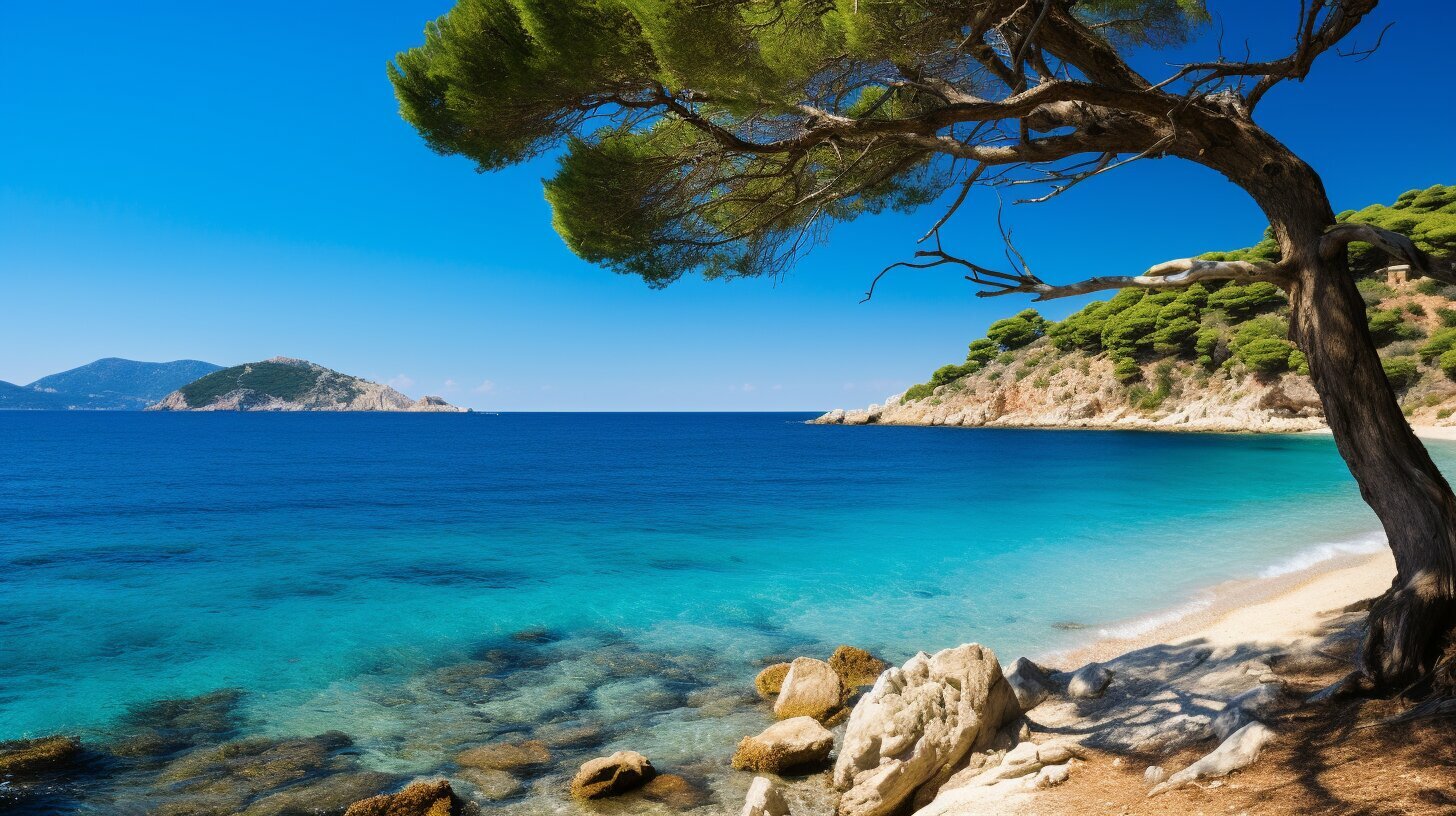
The long sandy bay has clear, relatively shallow water and views towards the neighbouring island of Schinoussa. Tamarisk trees provide patches of natural shade, although these can be claimed quickly during the busiest part of summer.
Livadi can be reached from Agios Georgios by following the coastal road. The distance is manageable on foot, but the route is exposed to the sun.
Above the beach are the remains of a settlement and fortification generally known as the Castle of Livadi.
Best for: Swimming, families and spending several hours beside the sea
3. Walk through Panagia
Panagia, also called Chora or Pano Chorio, is Iraklia’s inland village.
Its whitewashed houses and narrow lanes are spread across the hillside below Mount Papas. The village feels quieter and more traditional than the port, particularly outside the hours when visitors stop for meals.
Panagia is also the starting point for several of Iraklia’s most important walks. These include routes towards the Cave of Agios Ioannis, Merichas and the island’s higher ground.
The Church of the Presentation of the Virgin Mary is one of the village’s central landmarks.
4. Hike to the Cave of Agios Ioannis
The Cave of Agios Ioannis is Iraklia’s most significant natural attraction and one of the largest known caves in the Cyclades.
A marked trail begins near Panagia and crosses exposed, rocky terrain before descending towards the cave entrance. The walk provides extensive views over the sea and surrounding islands, but it should not be underestimated during hot weather.
The entrance is narrow and can require visitors to crouch or crawl. Beyond it are larger chambers containing stalactites, stalagmites and natural columns.
The cave is not a conventionally managed tourist attraction. There is no permanent lighting or developed visitor route, and independent exploration carries genuine risks. Anyone intending to enter should arrange an experienced local guide, carry suitable equipment and never go alone.
A religious service is traditionally held inside the cave around the feast of Saint John in late August.
Allow: At least half a day for the return hike and a properly guided visit
5. See the Cyclops Cave
A smaller open cave known as the Cave of the Cyclops stands opposite the Cave of Agios Ioannis.
Its name connects the landscape with the Homeric story of Polyphemus, although the association belongs to local tradition rather than an established archaeological identification.
The cave’s position and surrounding views make it a worthwhile addition to the Agios Ioannis walk. It should be treated as part of the same hiking excursion rather than a separate journey.
6. Explore Iraklia’s Walking Trails
Iraklia has one of the most rewarding walking networks in the Small Cyclades. Numbered routes connect its villages with beaches, caves, abandoned settlements and viewpoints.
Popular destinations include:
- The Cave of Agios Ioannis
- Merichas Bay
- Agios Athanasios
- Vorini Spilia Beach
- Mount Papas
- The Castle of Livadi
- Alimia Bay
Distances may appear short, but the landscape is exposed and often uneven. Summer walks should begin early, with more drinking water than would normally be carried for a similar distance.
An offline map, proper footwear and a charged phone are useful even on marked routes.
7. Visit the Abandoned Settlement of Agios Athanasios
Agios Athanasios is an abandoned settlement west of the inhabited villages.
Empty stone houses, narrow passages and ruined agricultural structures provide a glimpse of an earlier pattern of life on Iraklia. The settlement has not been restored as a formal attraction, which gives it atmosphere but also requires visitors to behave carefully around unstable buildings.
The walk passes through a quiet part of the island and is as important as the destination itself.
Agios Athanasios should be visited during daylight. Visitors should not enter unsafe structures or disturb anything remaining inside them.
8. Walk to Merichas Bay
Merichas is one of Iraklia’s most dramatic landscapes.
High cliffs drop sharply towards the sea, creating an enclosed bay that feels very different from the gentler coast around Agios Georgios and Livadi. Birds of prey can sometimes be seen circling the rock faces.
A marked walking route approaches the cliffs from Panagia. The viewpoint requires caution because of exposed edges, loose ground and strong wind.
The small beaches beneath the cliffs are more practically reached by boat. Walkers should not attempt to improvise a descent down the rock face.
Best for: Coastal scenery, geology and birdwatching
9. Visit the Castle of Livadi
The low hill above Livadi Beach contains the remains of a fortified settlement dating principally from the Hellenistic period.
Archaeological evidence from the area also points to earlier occupation, while the settlement continued to be used in much more recent times. Today, foundations and sections of ruined walls remain visible across the hillside.
The site is not presented like a major archaeological attraction. There may be limited interpretation, and much of its value comes from seeing how the remains relate to the surrounding land, beach and sea routes.
The elevated position also provides attractive views over Livadi Bay.
10. Snorkel over the Aircraft Wreck at Alimia
Alimia is a remote bay on Iraklia’s southwestern coast. Beneath its clear water lie the remains of a German Arado reconnaissance seaplane from the Second World War.
The wreck is submerged at a depth of approximately nine metres. Parts may be visible from the surface in favourable conditions, but reaching it is better suited to confident snorkellers and divers.
Alimia is generally approached by boat rather than as a straightforward beach walk. Local excursions may include the bay when weather conditions allow.
Visitors should view the wreck without touching, entering or attempting to remove anything from the site.
Best for: Experienced snorkellers and underwater history
11. Swim at Vorini Spilia
Vorini Spilia is a small beach on Iraklia’s northern coast, reached by following a walking trail from near Agios Georgios.
Its name refers to caves in the surrounding coastline. The setting feels secluded despite being relatively close to the port, making it a useful alternative when Livadi is busier.
Because the beach faces north, its conditions depend heavily on the wind. It is best visited on a calm day rather than during a strong meltemi.
There are no dependable facilities, so visitors should bring water, shade and food.
12. Discover Tourkopigado
Tourkopigado is a narrow, sheltered bay on the southern side of Iraklia.
The beach is composed largely of pebbles, and the surrounding coastline provides a more enclosed setting than the broad bay at Livadi. It can be a useful swimming choice when northerly winds affect the island’s more exposed beaches.
Access is possible by road and on foot, although the walk can feel long in summer heat. Visitors should not expect organised facilities.
Best for: A sheltered swim and a quieter beach day
13. Take a Boat around the Coast
Some of Iraklia’s most interesting coastal locations are difficult or impossible to reach safely from land.
Small boats operating from Agios Georgios may visit Alimia, Karvounolakkos, Merichas and other isolated coves. Routes depend on weather, demand and seasonal availability rather than a fixed daily programme.
A coastal trip provides a clearer sense of Iraklia’s cliffs and deeply indented shoreline than can be gained from the road.
Anyone particularly interested in the aircraft wreck at Alimia should establish whether that stop is included before joining a trip.
14. Walk to the Summit of Mount Papas
Mount Papas is Iraklia’s highest point and provides broad views across the Small Cyclades.
The route begins around Panagia and climbs through an exposed landscape towards the summit area and the Chapel of Profitis Ilias. It is one of the island’s more demanding walks, particularly in summer.
Clear conditions can reveal Naxos, Schinoussa, Koufonisia and other islands across the surrounding sea.
This hike should begin early in the day. Proper footwear, sufficient water and protection from the sun are essential.
15. Eat in Agios Georgios and Panagia
Iraklia’s tavernas are divided between the port and the inland village.
Agios Georgios offers the greatest convenience and a waterfront setting, while Panagia provides a quieter atmosphere for an evening meal after the day’s visitors have returned to the port.
Menus commonly feature Greek home cooking, local meat and cheese, fava, salads and seafood according to availability.
The separate guide to the Best Places to Eat in Iraklia covers the island’s individual tavernas in greater detail.
Can Iraklia Be Visited as a Day Trip?
Yes, but a day trip only provides a partial experience.
Visitors arriving for a few hours can explore Agios Georgios, walk to Livadi and have lunch beside the harbour. Reaching Panagia may also be possible if local transport aligns with the ferry schedule.
The Cave of Agios Ioannis, Mount Papas and more distant walking routes should not be attempted under the pressure of a same-day departure.
How Long Should You Spend in Iraklia?
Two nights provide enough time to explore both villages, visit Livadi and complete one substantial walk.
Three or four nights allow for the Cave of Agios Ioannis, a boat trip and several beaches without organising every day around a strict schedule.
Iraklia can also support a longer stay for visitors who enjoy walking, swimming and quiet evenings. Travellers seeking nightlife or a constantly changing selection of activities may find it too subdued.
Do You Need a Car?
A car is not essential. Agios Georgios, Livadi and Panagia can be connected on foot, and seasonal local transport may reduce the amount of walking required.
However, Iraklia is larger and hillier than its quiet reputation sometimes suggests. A vehicle can be useful for families, visitors with limited mobility or anyone carrying beach equipment.
Rental availability is limited and should be investigated before arrival rather than assumed.
The Best Time to Visit Iraklia
June and September are particularly well suited to Iraklia. The weather is normally warm enough for swimming, while walking conditions are more comfortable than during the height of summer.
July and August provide the greatest choice of ferry services, accommodation and dining, but midday hiking can become dangerously hot.
May and October are peaceful, although transport and local businesses may operate less frequently. Winter travel requires considerably more flexibility.
What to Bring to Iraklia
Iraklia has basic shops, but specialist supplies may not be available. Useful items include:
- Comfortable walking shoes
- A hat and strong sunscreen
- A refillable water bottle
- Cash
- A torch or headlamp
- Snorkelling equipment
- Essential medication
- An offline map
- A portable battery pack
- A light layer for windy evenings
A torch is particularly important for evening walks and should not be treated as sufficient equipment for independently exploring the Cave of Agios Ioannis.
A Two-Day Iraklia Itinerary
On the first day, explore Agios Georgios before walking to Livadi Beach. Visit the remains of the Castle of Livadi in the cooler part of the afternoon, then continue to Panagia for dinner.
Begin the second day early with a planned hike. Experienced walkers with appropriate guidance can visit the Cave of Agios Ioannis, while a shorter alternative is the route towards Merichas or Agios Athanasios.
Return to the port for a final swim at Agios Georgios and an evening meal beside the harbour.
Is Iraklia Worth Visiting?
Iraklia is worth visiting for travellers who want to walk through a largely undeveloped Cycladic landscape rather than move between organised attractions.
It offers more than its small size initially suggests: a significant cave, marked trails, archaeological remains, abandoned buildings, dramatic cliffs and a submerged wartime aircraft.
What it does not offer is bustle. The island is at its best when there is enough time to follow a path, swim without a schedule and let the villages become familiar over several days.
Explore More of Iraklia
Continue planning with these guides:
- Best Beaches in Iraklia
- Best Places to Eat in Iraklia
- Best Places to Stay in Iraklia
- Things to Do in Schinoussa
- Things to Do in Koufonisia