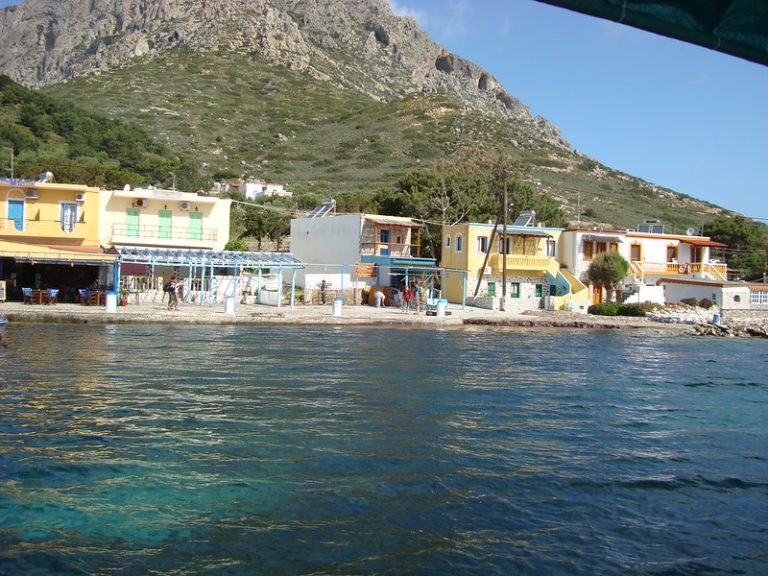
Things to Do in Lipsi: A Guide to the Quiet Dodecanese Island
Lipsi is a small Dodecanese island lying between Patmos and Leros, but it has enough beaches, walking routes, churches and traditional island life to reward visitors who stay for more than a day.
There is only one main village, built around a sheltered harbour, and the island covers roughly 16 square kilometres. Its modest size is one of its advantages: roads and paths radiate from the village towards beaches, chapels, vineyards and small coastal settlements, making much of Lipsi surprisingly easy to explore on foot.
Lipsi isn’t an island of major archaeological sites or conventional tourist attractions. Its appeal lies in swimming, walking, eating around the harbour and experiencing a Dodecanese island that has avoided large-scale resort development.
Explore Lipsi Village
Lipsi village is both the island’s port and its only substantial settlement.
Whitewashed houses climb gently away from the waterfront towards a compact centre of narrow streets and small squares. Fishing boats share the harbour with ferries and visiting yachts, while tavernas and cafés provide most of the island’s evening activity.
The village is small enough to explore without an itinerary. Walk away from the waterfront, find the central square and continue uphill for views back across the harbour.
Unlike destinations where the old town has become almost entirely tourist-oriented, Lipsi still feels like a functioning small island community.
Visit the Church of Agios Ioannis Theologos
The large Church of Agios Ioannis Theologos is one of the most recognisable buildings in Lipsi village.
Standing above the port, the present church dates from 1931 and was constructed with financial support from people from Lipsi living overseas.
Inside are important religious icons associated with the island, including Panagia Mavri, or the Black Madonna.
Its elevated position and distinctive architecture also make the church an important part of the village landscape.
Discover the Nikiforio Ecclesiastical-Folklore Museum
The Nikiforio Ecclesiastical-Folklore Museum provides some context for the history and traditions of Lipsi.
Located in the main village, its collection brings together religious and folkloric material associated with island life.
On an island where much of the visitor experience revolves around beaches and outdoor activities, the museum provides a useful introduction to the cultural side of Lipsi.
It is particularly worth seeking out when exploring the streets around the village rather than treating it as a separate excursion.
Walk to Lientou Beach
One of the advantages of staying in Lipsi village is how quickly you can reach the sea.
Lientou is only a few minutes’ walk from the village and is one of the island’s most convenient beaches. It has sand, shallow clear water and tamarisk trees providing natural shade.
Its proximity makes it particularly useful for an early-morning or late-afternoon swim when there isn’t time to travel farther around the island.
Families may also appreciate the relatively shallow water.
Continue to Kampos Beach
Walk a little farther beyond Lientou and you reach Kampos.
This is another sandy beach with clear water and tamarisk trees. It remains easily accessible on foot from the village, making the Lientou-Kampos stretch particularly useful for visitors without transport.
Rather than treating each beach as a separate expedition, walking between the village, Lientou and Kampos is an enjoyable way to experience this part of the island.
Spend the Day at Katsadia
Katsadia is one of the most popular places outside Lipsi village.
The sandy beach sits in a sheltered bay with shallow water and trees providing shade. There is also somewhere to eat beside the beach, making Katsadia practical for spending several hours rather than simply stopping for a swim.
The bay attracts visiting yachts, adding a little activity without changing its relaxed atmosphere.
Katsadia is approximately a 15-minute walk from the village according to the municipality, making it another good choice for travellers exploring Lipsi without a car.
Walk from Katsadia to Papandria
Papandria is close enough to Katsadia that the two beaches can easily be combined.
The small bay has sand and pebbles, clear water and views towards the uninhabited islet of Lyra.
More interestingly, walkers can continue along the coastline beyond Papandria to find additional small coves.
This is characteristic of Lipsi: some of the best experiences come from walking a little farther than the obvious destination.
See the White Pebbles of Hohlakoura
Hohlakoura — also written Chochlakoura or Kohklakoura — is one of the most visually distinctive beaches on Lipsi.
White pebbles cover both the shore and seabed, helping give the water an intense aquamarine appearance.
There is very little natural protection from the sun, although a cave beside the beach can provide some shade.
Hohlakoura is roughly a 30-minute walk from the village and is worth the effort for visitors who prefer more rugged beaches to the sandy bays closer to town.
Visit Platis Gialos
Platis Gialos is another of the island’s standout beaches.
Situated about 3.5 kilometres from the village, it has shallow aquamarine water, tamarisk trees and a taverna nearby.
The beach is relatively sheltered and is a good choice for visitors wanting somewhere they can comfortably spend much of the day.
It is possible to walk there, although the hills make transport attractive in hot weather.
Make the Walk to Monodendri
Monodendri is one of the beaches that best demonstrates the rewards of exploring Lipsi on foot.
Its name means “single tree”, referring to the solitary juniper standing on the rocks beside the white-pebble beach.
Reaching Monodendri involves considerably more walking than visiting Lientou or Katsadia. The municipality estimates around an hour on foot from the village.
The reward is a much wilder landscape and considerably fewer visitors.
For keen walkers, it should be high on the list.
Walk the Path of Kimissi
Lipsi’s churches provide some of its most interesting walking destinations.
The Upper and Lower churches of Panagia at Kimissi are connected by a roughly 900-metre stone-paved path.
The older Upper Panagia dates from around 1500, while Lower Panagia dates from the 18th century. The setting around Kimissi includes vegetation and a freshwater spring, creating a striking contrast with the generally dry landscape elsewhere on Lipsi.
Combining the churches, path and nearby coastline makes this one of the island’s most worthwhile walks.
Visit Panagia tou Harou
Panagia tou Harou is the church most closely associated with Lipsi.
Its unusual name is connected with an icon depicting the Virgin Mary holding the crucified Christ rather than the infant Jesus. The church’s origins date to around 1600, when monks from Mount Athos established themselves here.
It is also the centre of the island’s most important religious celebration.
Each August, a procession and festival associated with Panagia tou Harou attracts visitors from surrounding islands.
Even outside the festival period, the church is worth visiting for its importance to the identity and religious traditions of Lipsi.
Look for Early Christian Remains
Lipsi contains traces of a much older Christian landscape than its present-day churches initially suggest.
At Kouselio, the small Church of Panagia stands on the remains of a large early Christian basilica. Byzantine inscriptions and reused architectural material survive at the site.
At Katsadia, the Church of Agios Panteleimon similarly stands beside the remains of a three-aisled basilica dating from around the 5th century, where remnants of mosaic floors survive.
These aren’t large formal archaeological attractions. Instead, ancient remains are incorporated into the island’s later religious landscape.
That makes them particularly interesting for travellers who enjoy discovering history outside museums and major archaeological sites.
Walk Around the Island
Lipsi is particularly well suited to walking.
The municipality describes almost all of the island’s beaches as accessible overland, with most reachable from the village within an hour.
Routes pass through a dry Aegean landscape of low hills, fields, vineyards and olive groves before reaching beaches and small chapels.
This makes walking more than simply a means of getting from one attraction to another. It is one of the principal ways to experience the island.
In summer, longer walks are best undertaken early in the morning or later in the afternoon, and carrying water is essential.
Take a Boat Trip Around the Islets
Lipsi is actually the largest island in a small archipelago surrounded by numerous islets.
Boat trips provide a completely different perspective on the area, opening up isolated swimming places and allowing visitors to appreciate just how fragmented the surrounding seascape is.
The wider Lipsi island group is also environmentally significant, providing habitat for marine and bird life.
For visitors staying several days, a boat trip is one of the best ways to add variety after exploring the main island on foot.
Try the Local Wine
Wine has a long association with Lipsi and remains part of the island’s identity.
Vineyards can be seen while exploring the countryside, and local wine appears naturally alongside the island’s food culture.
Wine festivals are also held during summer, while religious feast days bring together food, wine, music and dancing.
Rather than seeking out wine as a formal tasting attraction, it is better experienced as part of eating and participating in island life.
Experience a Traditional Festival
Visitors arriving in August may encounter some of Lipsi’s most important celebrations.
The feast associated with Panagia tou Harou takes place around August 22–23 and is the island’s largest religious festival.
Other celebrations include the Assumption of the Virgin on August 15 and the Transfiguration of Christ in August.
These events can transform what is normally a very quiet island, bringing together residents, returning island families and visitors from neighbouring islands.
Enjoy the Harbour in the Evening
There is no need to fill every hour on Lipsi with sightseeing.
In the evening, the harbour and village become the natural centre of activity. Fishing boats return, yachts settle in for the night and people gather around the tavernas and cafés.
Dinner followed by a walk along the waterfront is about as complicated as nightlife needs to become here.
For travellers choosing Lipsi precisely because it isn’t a major resort island, that simplicity is part of the attraction.
Is Lipsi Worth Visiting?
Lipsi is particularly rewarding for travellers who like small islands that can be understood on foot.
There are enough beaches and walking routes to fill several days, while churches, early Christian remains, local food and the surrounding islets provide more variety than the island’s size might suggest.
It isn’t the right destination for extensive nightlife, shopping or organised attractions.
Instead, Lipsi works best for swimming in a different bay each day, walking between small churches and beaches, eating around the harbour and gradually getting to know an island compact enough to feel manageable.
How Long Should You Stay in Lipsi?
A day trip provides enough time to see the village and perhaps one or two nearby beaches, but three or four days is a much better introduction.
That allows time for the village, several different beaches, the Kimissi walk and a boat excursion without turning the visit into a checklist.
Walkers and travellers specifically looking for a quiet island could comfortably stay longer.
Lipsi also combines naturally with nearby Patmos and Leros, making it a useful stop on a slower journey through this part of the Dodecanese.
Explore More of Lipsi
Continue planning a visit with:
Best Places to Eat in Lipsi — discover tavernas, seafood and casual places to eat around the village and beaches.
Best Places to Stay in Lipsi — choose between accommodation around the harbour and quieter parts of the island.
Best Beaches in Lipsi — explore Lientou, Katsadia, Platis Gialos, Hohlakoura, Monodendri and the island’s secluded coves.
Things to Do in Leros — continue exploring the Dodecanese on neighbouring Leros.
Things to Do in Patmos — combine Lipsi with its historically important neighbour to the south.