Things to Do in Kythira: Villages, Castles & Coastal Adventures
Kythira rewards visitors who look beyond the beach. Positioned south of the Peloponnese, the island combines Venetian castles, whitewashed villages, old watermills and a coastline of rocky swimming coves and open bays.
Also written as Kythera, it is traditionally associated with the Ionian Islands, although its location gives it a character distinct from Corfu or Zakynthos. Settlements are scattered across the countryside, so exploring involves travelling between different parts of the island rather than concentrating on one main resort.
The best things to do in Kythira include walking through Chora, exploring Mylopotamos, swimming at Kaladi and spending an afternoon beside the water in Avlemonas. Allowing time for inland villages adds another dimension to a holiday here.
Kythira at a Glance
| Experience | Where to go | Planning advice |
|---|---|---|
| Historic capital and castle | Chora | Combine with the archaeological museum |
| Waterfront walks and swimming | Kapsali | An easy addition to a Chora visit |
| Watermills and village scenery | Mylopotamos | Waterfall flow depends on rainfall |
| Coastal village atmosphere | Avlemonas | Combine with nearby Paleopolis |
| Dramatic beach scenery | Kaladi | Access involves a substantial staircase |
| Religious heritage | Myrtidiotissa Monastery | Dress respectfully and check visiting times |
| Medieval ruins | Paleochora | Wear suitable footwear |
| Coastal boat excursion | Chytra | Trips depend on sea conditions |
| Walking | Kythera Trails network | Choose routes appropriate to fitness and weather |
1. Explore Chora and Its Venetian Castle
Chora, the island’s capital, occupies a hillside above the southern coast. Narrow lanes, whitewashed houses and small squares make it a rewarding place to explore on foot.
The Venetian castle dominates the settlement. Its elevated position helps explain the strategic importance of Kythira, with broad views towards Kapsali and the surrounding sea.
A visit works best as a combination of castle exploration and an unhurried walk through the town below. Look for the passages, churches and changes in architectural detail rather than treating Chora simply as a viewpoint.
Some lanes and approaches are steep or uneven. Comfortable shoes make exploring easier, particularly when combining the town with the climb to the castle. Check access arrangements before planning an early or late visit.
2. Visit the Archaeological Museum of Kythira
Located near the entrance to Chora, the Archaeological Museum provides context for the landscapes and historic sites encountered around the island.
Its collection traces Kythira’s history from prehistoric settlement into the Roman period. Visiting early in a stay helps connect individual places with the island’s wider history of settlement and maritime contact.
The museum is a manageable addition to a Chora visit, especially during the warmer part of the day when walking outside becomes less appealing.
Opening days and seasonal hours should be checked before travelling. Allow time for both the museum and the town rather than attempting to fit them into a brief stop between beaches.
3. Spend Time Beside the Water in Kapsali
Below Chora, Kapsali curves around twin bays with the castle rising above the waterfront.
It is a convenient place to combine swimming with a meal or an evening walk. Unlike beaches reached by rough roads or long paths, Kapsali offers the practical advantages of a seaside settlement, with places to eat and drink nearby.
The view back towards Chora gives the waterfront much of its appeal. Visitors staying inland can make this the final stop of a southern sightseeing day, continuing from the castle to the sea.
Kapsali also serves as a departure point for some coastal excursions. Availability depends on the season and weather, so boat trips are best arranged locally rather than assumed to operate every day.
4. Discover Mylopotamos and the Valley of the Watermills
Mylopotamos offers a different side of Kythira, with a village square, shaded corners and a ravine containing the remains of watermills.
The mills reveal how earlier communities used flowing water to grind grain. Exploring this landscape adds an agricultural and industrial story to an island often associated mainly with beaches and castles.
The nearby Neraida Waterfall, also called Fonissa, is a familiar attraction. However, its appearance depends on rainfall and the season. Photographs showing a powerful cascade should not be taken as a guarantee of summer conditions.
The Kythera Trails network includes the M41 Valley of the Watermills route. Check its current condition and difficulty before setting out: a longer ravine walk requires more preparation than a stroll around the village.
5. Explore the Castle Settlement of Kato Chora
Near Mylopotamos, Kato Chora preserves the remains of a fortified settlement.
Its gateway, old buildings and churches provide an atmospheric contrast with the inhabited village nearby. The Venetian lion above the entrance is a reminder of the island’s connections with Venice.
This is a place for slow exploration. Details in the stonework and the relationship between the defensive walls and surrounding landscape are more rewarding than rushing through for a photograph.
Combine Kato Chora with Mylopotamos, but allow separate time for each. Uneven surfaces and exposed sections make sturdy footwear useful.
6. Visit Avlemonas and Its Rocky Swimming Coves
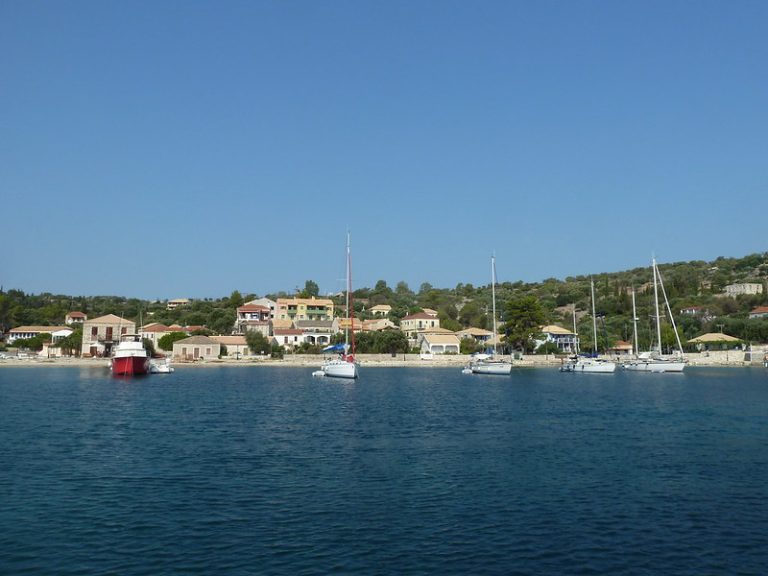
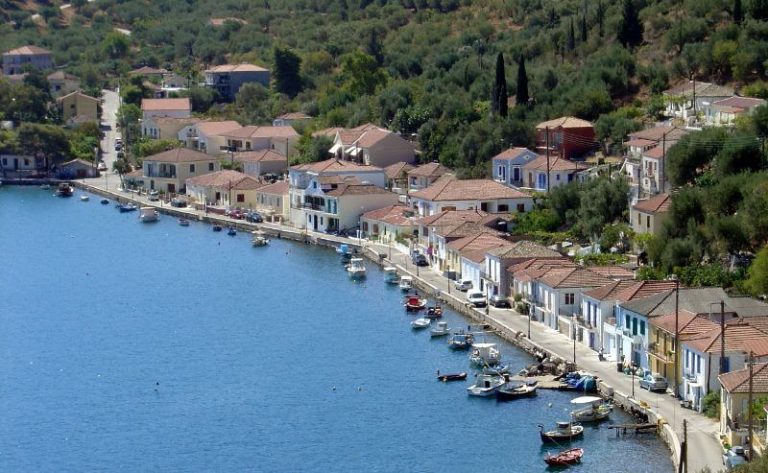
Avlemonas is one of Kythira’s most distinctive coastal villages. Houses and waterfront establishments overlook small inlets, while the rocky shoreline creates a setting quite different from a broad sandy beach.
Walking around the village reveals its harbour, a small Venetian fort and the waterfront buildings that give Avlemonas its character.
In suitable conditions, the swimming spots are part of the attraction. Entry is often from rocks or steps, so visitors should assess access and the sea before getting in.
Nearby Paleopolis provides an alternative for those seeking a more open stretch of shoreline. Together, the two places make a varied coastal outing without requiring a long list of separate stops.
7. Swim at Kaladi Beach
Kaladi is among Kythira’s best-known beaches, recognised for its rock formations, pebbly shoreline and blue-green water.
The approach includes a substantial flight of steps. That makes the return climb an important consideration, particularly in summer heat or when carrying equipment.
Travel light, bring drinking water and avoid assuming that refreshments will be available beside the water. Kaladi is better suited to visitors comfortable with stairs than those requiring easy access.
The scenery is the main attraction, but swimming conditions still depend on the wind and waves. Choose another beach if the sea is unsuitable.
8. Visit Myrtidiotissa Monastery
The Monastery of Panagia Myrtidiotissa is one of Kythira’s most important religious landmarks.
Associated with the island’s venerated icon of the Virgin Mary, it remains a place of worship and pilgrimage. Its significance extends beyond its architecture, reflecting traditions that continue to shape island life.
A visit offers a quieter change of pace from coastal sightseeing. Allow time to appreciate the setting and the church rather than treating the monastery as a quick roadside stop.
Visitors should dress respectfully, observe any photography restrictions and check visiting arrangements. Religious services may affect access.
9. Explore the Ruins of Paleochora
Paleochora, also known as Agios Dimitrios, was a medieval settlement whose ruins occupy a dramatic position above deep ravines.
Its destruction during Barbarossa’s attack in 1537 forms an important part of Kythira’s history. Surviving walls and churches help visitors imagine a settlement built in a location intended to offer protection.
The appeal lies in both the remains and their setting. This is an archaeological landscape rather than a restored town with continuous visitor facilities.
Stay on appropriate paths and keep clear of unstable walls and exposed edges. A visit to the ruins should not be confused with attempting a descent through the surrounding gorges.
10. Take a Boat Trip Towards Chytra
Chytra, also written as Hytra, is the rocky islet visible off southern Kythira.
Boat excursions from Kapsali can provide a closer view of its steep coastline and sea cave. Changing light on the water is part of the attraction, although the experience varies with conditions.
Confirm the itinerary with the operator, including whether swimming is offered and what level of swimming ability is required.
Cave entry and swimming should always depend on the operator’s assessment. Wildlife must be left undisturbed, and passengers should follow instructions about approaching sensitive coastal areas.
11. Explore the Inland Villages
Kythira’s inland settlements deserve time between the better-known sights.
Potamos is a useful place to experience village activity, with shops, cafés and a square that acts as a gathering point. Its Sunday market is worth asking about locally when planning a visit.
Mitata and Viaradika introduce another part of the interior, with village scenery and views across the surrounding countryside.
Rather than attempting every settlement in one day, choose a small group along the same route. Stopping for coffee or lunch allows more time to appreciate these places than a sequence of brief drives through them.
Planning a Visit to Kythira
How Long Should Visitors Stay?
Four or five nights allow time for the main sights, several beaches and some village exploration. A week provides more flexibility for walking, boat trips and weather-dependent activities.
For a shorter visit, organise outings geographically:
- South: Chora, the archaeological museum and Kapsali.
- West: Mylopotamos, Kato Chora and Myrtidiotissa.
- East: Avlemonas, Paleopolis and Kaladi.
- Interior and north: Potamos, inland villages and Paleochora.
Is a Car Useful?
A car makes exploring Kythira considerably easier because settlements and attractions are spread out.
Check the final approach to beaches and rural sights before driving. A navigation app’s suggested shortcut may involve an unsuitable track, and rental agreements may restrict unpaved-road use.
What About Agia Sophia Cave?
The Agia Sophia Cave near Mylopotamos is known for its formations and religious paintings. However, visitors should confirm that it is open before making a dedicated journey.
Kythira has several caves associated with Saint Sophia, so specify Mylopotamos when asking for information. Access arrangements for one cave should not be assumed to apply to another.