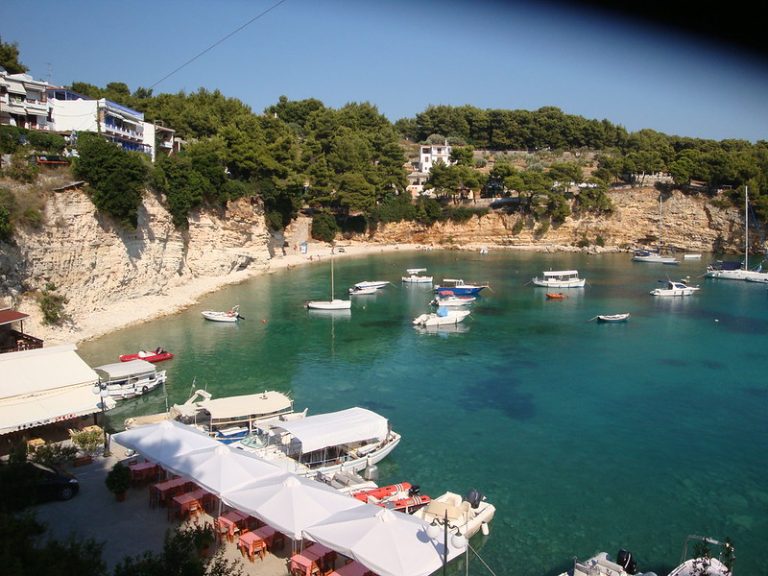
Things to Do in Skopelos: Towns, Beaches and Pine-Forest Walks
Skopelos combines wooded hills, clear-water bays and traditional settlements that reward exploring on foot. Its appearance in Mamma Mia! introduced the island to a wider audience, but the best things to do in Skopelos extend well beyond the film locations.
Days can be spent wandering the stepped streets of Skopelos Town, visiting monasteries on Mount Palouki or stopping for lunch beside the harbour at Agnontas. Elsewhere, hillside Glossa offers broad sea views, while beaches such as Panormos and Milia provide opportunities to slow down.
The island suits visitors who enjoy mixing swimming with village walks and scenic journeys. Choosing a few outings rather than rushing between attractions leaves time to appreciate the landscape along the way.
Skopelos at a Glance
| Experience | Location | What to expect |
|---|---|---|
| Explore Skopelos Town | Main harbour settlement | Traditional houses, churches, lanes and waterfront dining |
| Visit Panagitsa tou Pyrgou | Harbour end of Skopelos Town | A whitewashed church and elevated sea views |
| Climb to Agios Ioannis at Kastri | Near Glossa | The famous rocky chapel setting associated with Mamma Mia! |
| Wander through Glossa | Northwestern Skopelos | Hillside streets, tiled roofs and views towards the sea |
| Visit the Palouki monasteries | Above Skopelos Town | Religious heritage and wooded surroundings |
| Explore the Folklore Museum | Skopelos Town | Traditional household objects and island culture |
| Spend time at Panormos | Western coast | A pebbly bay with seasonal services |
| Stop at Agnontas | Southwestern coast | A small harbour, beach and waterside tavernas |
| Walk to Sentoukia | Mount Karya area | Rock-cut tombs and an elevated outlook |
| Follow an island trail | Various locations | Old paths, forest, farmland and coastal scenery |
1. Explore the Streets of Skopelos Town
Skopelos Town, also called Chora, rises above its harbour in layers of whitewashed houses, tiled roofs and narrow streets.
The waterfront is an easy starting point, with cafés, restaurants and views across the bay. However, the town becomes more interesting when visitors turn inland and follow the lanes uphill.
Steps connect small neighbourhoods, churches and occasional openings between the houses. Wooden balconies, planted courtyards and colourful doors add detail to an unhurried walk.
There is no need to follow a demanding sightseeing route. Allow time to wander, stop for refreshments and return to the waterfront by a different street.
Early morning is particularly pleasant for exploring during summer. Evening brings a livelier atmosphere around the harbour, making the town rewarding to visit more than once.
Practical tip: accommodation in the upper town can involve many steps. Visitors arriving with luggage should confirm access arrangements beforehand.
2. Visit Panagitsa tou Pyrgou
Panagitsa tou Pyrgou, often translated as the Virgin Mary of the Tower, is one of the most recognisable churches in Skopelos Town.
Standing above the end of the harbour, its whitewashed exterior and terraced surroundings create a distinctive landmark. The approach involves climbing steps from the waterfront.
The outlook takes in the harbour, town and open water. It is a useful place to appreciate how the settlement climbs away from the coast.
Continue through the nearby upper lanes afterwards rather than treating the church as a separate journey. The surrounding neighbourhood provides some of the town’s most atmospheric walking.
Church access can vary, but the exterior and setting are worthwhile in their own right.
Practical tip: wear shoes suitable for steps and remain considerate of worshippers when the church is open.
3. Climb to Agios Ioannis at Kastri
The chapel of Agios Ioannis at Kastri occupies a dramatic rocky outcrop near Glossa.
Its association with Mamma Mia! makes it one of the island’s most visited sights, particularly for travellers interested in the film’s wedding setting. The landscape also appeals to visitors who have little interest in the musical.
A stairway climbs steeply towards the chapel, with views opening across the coastline during the ascent. The steps are exposed and can feel demanding in hot weather.
Allow time to enjoy the setting rather than rushing up and down. Visitors uncomfortable with heights or steep stairs can appreciate the rock and coastline from below.
The chapel is small, so its appeal lies largely in the approach and position rather than a lengthy interior visit.
Practical tip: visit early or later in the afternoon during hot weather, carry water and avoid relying on a precise step count when judging whether the climb is suitable.
4. Wander Through Glossa
Glossa occupies a hillside above Loutraki, its port on the northwestern side of Skopelos.
The village offers a different experience from the main town. Narrow lanes weave between two-storey houses with tiled roofs and wooden balconies, while elevated positions provide views towards the sea.
A visit works well around a leisurely walk and a meal. Explore the streets, pause in the village centre and allow time to enjoy the outlook.
Glossa can also be combined with Agios Ioannis at Kastri, provided the journey between them is planned sensibly. They are separate destinations rather than neighbouring stops on a short pedestrian stroll.
Loutraki, below the village, provides another setting for a coastal stop.
Practical tip: ferry tickets may describe the port as Glossa, but vessels arrive at Loutraki. Reaching accommodation in the hillside village requires an onward journey.
5. Visit the Monasteries on Mount Palouki
Mount Palouki rises above the area around Skopelos Town and contains several of the island’s important religious sites.
Among them are the monasteries of Evangelistria, Metamorphosis tou Sotiros, Agia Varvara and Timios Prodromos.
Their appeal combines religious heritage with wooded surroundings and views. Visiting one or two allows time to appreciate the buildings without turning the day into a checklist.
Opening arrangements differ, and some sites may have limited visiting periods. Confirm access locally before making a special journey.
The monasteries can be approached as part of a drive or a planned walk. Roads and paths should be assessed separately: a route suitable for hiking is not necessarily appropriate for an ordinary hire car.
Practical tip: dress modestly and keep noise low. Ask before photographing interiors or residents.
6. Discover Island Life at the Folklore Museum
The Folklore Museum of Skopelos introduces visitors to the island’s domestic traditions and material culture.
Located in Skopelos Town, it offers a useful complement to the streets and buildings outside. Household objects, furnishings and traditional displays help explain how island homes were arranged and used.
It is particularly worthwhile for visitors interested in everyday history rather than only major monuments.
The museum also provides an alternative activity between beach outings, although opening hours should be checked before planning around it.
Glossa has its own folklore museum, giving travellers another possibility when exploring the northwestern part of the island.
Practical tip: choose the museum that fits the day’s route and confirm that it will be open, especially outside peak season.
7. Spend a Beach Day at Panormos
Panormos is a popular western-coast bay where wooded slopes meet a pebbly shoreline.
It suits visitors who want to combine swimming with nearby places to eat rather than organising a remote coastal expedition.
Seasonal sunbeds and other services make a longer stay straightforward, but visitors should check current arrangements on arrival. The water can deepen relatively quickly, so assess the entry before swimming.
Panormos also makes a useful base for exploring other western beaches, including Milia and Kastani. There is no need to visit them all in one day; choosing one and spending time there is often more enjoyable.
Practical tip: bring footwear suitable for pebbles and check the return timetable if using the island bus.
8. Stop for Lunch Beside the Harbour at Agnontas
Agnontas is a small coastal settlement with a harbour, beach and waterside tavernas.
It provides a rewarding stop during a day exploring the southern and western parts of Skopelos. Visitors can walk beside the water, have a meal and spend time on the beach without organising a complicated excursion.
Fishing boats contribute to the harbour’s character, although restaurant menus and the availability of particular fish vary.
Nearby Limnonari offers another bay to consider as part of the outing. Check the route and transport arrangements before deciding to combine the two on foot.
Agnontas is best enjoyed slowly, with time for a meal rather than only a quick photograph.
Practical tip: when ordering whole fish, confirm the price by weight and the approximate total before it is prepared.
9. Walk to the Rock-Cut Tombs at Sentoukia
Sentoukia, also written Sendoukia, is an archaeological site in the Mount Karya area northwest of Skopelos Town.
The attraction consists of rectangular tombs cut into the rock, set in an elevated landscape with broad views.
The remains are modest compared with a large archaeological complex, but the combination of history, walking and scenery makes the outing worthwhile.
Access involves an approach on foot. Ask locally about the current route, parking point and condition of the track before setting out.
The site is better suited to visitors comfortable on uneven ground than those looking for an easily accessible roadside attraction.
Practical tip: wear sturdy shoes, carry water and avoid climbing into or disturbing the tombs. Their setting is part of the experience.
10. Follow a Walking Trail Through the Interior
Walking offers a closer view of Skopelos’s forests, farmland, monasteries and old connections between settlements.
The island’s trail network includes routes towards coastal areas as well as inland walks. Options around Mount Palouki, Panormos and Agnontas provide different combinations of scenery and effort.
Choose a route according to distance, ascent and return arrangements. A woodland setting does not guarantee continuous shade or an easy walk.
Use a current trail map rather than relying only on a general road map. Confirm the condition of the intended path, particularly after poor weather.
Spring and autumn can be rewarding for walking, while summer outings are best planned around cooler hours.
Practical tip: carry enough water for the whole route and arrange transport in advance when the walk finishes somewhere different from the starting point.
How to Get to Skopelos
Skopelos has no airport. Visitors arrive by ferry, either from a mainland departure port or another Sporades island.
Via Skiathos
Flying to Skiathos and continuing by ferry is a useful option when suitable connections are available.
Allow time to travel between the airport and port. A tight flight-to-ferry connection can create unnecessary pressure, and an overnight stay may be more comfortable.
From Mainland Greece
Volos and Mantoudi on Evia are important ferry gateways. Other connections may operate seasonally.
Check both the departure date and arrival port before booking. Skopelos Town and Loutraki are separate ports, and choosing the wrong transfer can add a substantial journey.
Getting Around Skopelos
A combination of walking and seasonal buses can work for visitors staying in the main settlements and visiting beaches along the bus route.
A hire car provides more flexibility for Glossa, inland sights and outings that involve several stops. However, narrow village streets and limited parking mean that exploring town centres is usually easier on foot.
Do not assume a bus stop is directly beside a beach or attraction. Check the final walking section and the last return service.
For visitors staying in an upper-town property, steps and luggage access may matter more than the advertised distance from the harbour.
How Many Days Are Needed?
Four or five nights provide time for Skopelos Town, Glossa, a beach day and one or two additional outings.
A week allows a more relaxed combination of swimming, walking and village visits, with room to adjust plans around weather.
For a short stay, choose a manageable area rather than trying to reach every corner. Skopelos Town and the northwestern village of Glossa are best appreciated with enough time between journeys.
When Is the Best Time to Visit?
June and September suit travellers who want to combine swimming with sightseeing, subject to the weather and seasonal services.
July and August bring the busiest holiday atmosphere and greater demand for accommodation, restaurants and transport.
Spring and autumn appeal to walkers, although boat trips and tourist businesses may operate reduced schedules.
For further advice, see Best Time to Visit the Greek Islands.