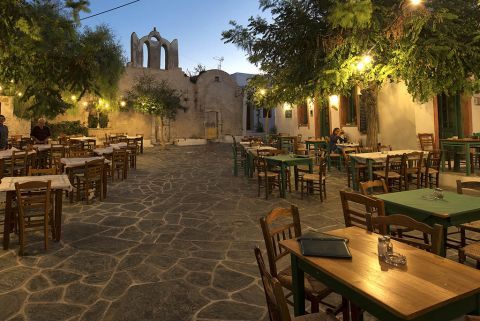
Things to Do in Thirasia: Villages, Caldera Views and Walking Trails
Thirasia sits directly across the caldera from Santorini, but the two islands provide remarkably different experiences.
Santorini has famous cliff-top towns, luxury hotels and busy viewpoints. Thirasia has quiet villages, abandoned cave houses, small churches, walking trails and expansive views back towards the volcano and Santorini’s eastern cliffs.
Many visitors see Thirasia only as a short stop during a caldera cruise.
That provides enough time for lunch beside Korfos harbour, but not enough to understand the island.
To experience Thirasia properly, climb to Manolas, explore Potamos, walk through its volcanic countryside and allow time for places such as Agrilia, Kera and the Monastery of the Dormition.
Thirasia at a Glance
Best village: Manolas
Best harbour atmosphere: Korfos
Best traditional settlement: Potamos
Best unusual place: Abandoned Agrilia
Best walk: Manolas to Kera and the Monastery of the Dormition
Best caldera views: Manolas and the eastern cliff edge
Best easy swimming: Agia Irini near Riva
Best for lunch beside the water: Korfos
Best reason to stay overnight: Experiencing the island after excursion boats leave
Time needed: One full day, although two nights provide a much better experience
1. Explore Manolas
Manolas is the natural starting point for exploring Thirasia.
The island’s principal village stands high above the caldera, directly across the water from Santorini.
Whitewashed houses, small churches and narrow lanes follow the top of the cliff. The setting resembles the caldera villages of Santorini, but without the same concentration of hotels, shops and crowds.
Walk slowly through the settlement rather than treating it as merely the top of the climb from Korfos.
Look for older houses, gardens, cave-like buildings cut into the volcanic ground and unexpected views between the lanes.
The caldera outlook is the village’s greatest attraction.
From the eastern edge of Manolas, visitors can look across towards Santorini, Nea Kameni and the flooded centre of the volcanic complex.
Allow: one to two hours.
2. Climb the Steps from Korfos to Manolas
Korfos is the small harbour directly beneath Manolas.
A steep zigzagging path connects the two settlements, climbing the caldera wall through approximately 270 steps.
The walk is one of Thirasia’s defining experiences.
Views expand across the water as the path rises, while the harbour and visiting boats gradually become smaller below.
The climb is exposed and can be exhausting during the middle of a summer day.
Wear secure footwear, carry water and allow plenty of time.
Travellers arriving on an excursion boat should check exactly when their vessel departs before beginning the climb. A short cruise stop may not provide enough time to reach Manolas, explore the village and return comfortably.
Allow: approximately 25 to 40 minutes uphill, depending on fitness and heat.
3. Spend Time at Korfos Harbour
Korfos is more than an arrival point.
Several traditional tavernas line the narrow waterfront, with tables facing the caldera and Santorini.
Fishing shelters, small boats and the volcanic cliff rising immediately behind the harbour create one of Thirasia’s most recognisable scenes.
Most organised cruise passengers remain around Korfos.
That makes the harbour lively when boats arrive, but the atmosphere changes quickly after they depart.
Have lunch beside the water, watch boats cross the caldera or swim from the dark volcanic shoreline when conditions are suitable.
Korfos is most rewarding when there is enough time to remain after the busiest excursion period rather than rushing straight back onto a boat.
Allow: two hours for lunch and a walk along the waterfront.
4. Walk Through Potamos
Potamos provides a quieter look at everyday life on Thirasia.
The village stands inland from the caldera edge and is one of the island’s principal inhabited settlements.
Traditional houses, cave dwellings and churches are scattered through a landscape shaped by volcanic rock and agricultural terraces.
Potamos doesn’t have the dramatic position of Manolas or the waterfront tavernas of Korfos.
Its attraction is different.
This is where visitors can see a more lived-in side of the island, away from the route followed by most cruise passengers.
Combine Potamos with a longer walk between Manolas and Riva rather than making it an isolated stop.
Allow: approximately one hour.
5. Discover the Abandoned Cave Village of Agrilia
Agrilia is one of the most unusual places on Thirasia.
The settlement was constructed within a natural ravine, where homes and agricultural spaces were cut into the soft volcanic ground.
Many of the cave houses are now abandoned.
Their entrances can be difficult to see until visitors are close, making the former village appear to emerge from the landscape.
Agrilia once supported a much larger farming community. Residents cultivated grapes, barley, fava beans and the small tomatoes associated with the Santorini islands.
Changing economic conditions and the decline of traditional agriculture gradually emptied the settlement.
A brightly painted church remains among the abandoned dwellings, providing a striking contrast with the muted volcanic surroundings.
Agrilia is not a polished archaeological attraction.
Paths can be indistinct, structures may be unstable and access requires care. Visitors unfamiliar with the route should consider local guidance rather than wandering through abandoned buildings independently.
Allow: several hours as part of a guided or carefully planned walk.
6. Walk to Kera
Kera is another abandoned settlement in southern Thirasia.
Ruined cave houses and old agricultural buildings are scattered across the volcanic landscape between Manolas and the island’s southern monastery.
The settlement was heavily affected by the 1956 earthquake that damaged communities throughout the Santorini island group.
Rather than expecting a clearly defined village centre, visitors should approach Kera as a landscape of ruins.
Stone walls, terraces and abandoned dwellings reveal how much of Thirasia was once cultivated and inhabited.
Kera is best incorporated into the walk from Manolas towards the Monastery of the Dormition.
Wear proper walking shoes and avoid entering structures that appear unstable.
7. Visit the Monastery of the Dormition
At the southern end of Thirasia, the Monastery of the Dormition of the Virgin Mary occupies one of the island’s most dramatic locations.
The monastery is also called the Monastery of Kera or Panagia.
Its position near the edge of the island provides broad views over the Aegean, the caldera and the surrounding volcanic islands.
The journey is a significant part of the experience.
Walking from Manolas passes small chapels, volcanic countryside and the scattered remains of Kera before reaching the monastery.
Visitors should dress respectfully and remember that access to the interior may not always be possible.
Even when buildings are closed, the setting and views justify the walk.
Allow: at least three hours for the return excursion from Manolas, including stops.
8. Follow the Manolas–Profitis Ilias–Kera Walk
This is the strongest walking route for understanding Thirasia.
The route begins in Manolas and heads south through the island’s open volcanic landscape.
It passes several small chapels before reaching Profitis Ilias, positioned on elevated ground with views towards the southern end of Thirasia.
From there, the route continues through the ruins around Kera towards the Monastery of the Dormition.
The direct distance is not enormous, but limited shade, loose surfaces and summer heat make the walk more demanding than the map suggests.
Carry more water than seems necessary.
Trail markings and conditions can change, so check locally before setting out.
The walk should not be squeezed into a short cruise stop.
It is better suited to independent day visitors arriving early or travellers staying overnight.
9. See Thirasia’s Churches
Churches and small chapels are scattered throughout Thirasia.
Some stand within the inhabited villages, while others occupy isolated positions overlooking the caldera or agricultural landscape.
Important stops include the churches around Manolas and Potamos, Profitis Ilias, the church among the cave houses of Agrilia and the Monastery of the Dormition in the south.
These buildings are not simply decorative additions to the scenery.
They remain connected to island families, religious festivals and the history of settlements that have otherwise declined or disappeared.
Dress appropriately, avoid interrupting services and don’t assume every church will be unlocked.
10. Visit Riva and Agia Irini
Riva is Thirasia’s practical northern port.
The settlement is also known as Agia Irini, after the church associated with the area.
Local boats from Ammoudi on Santorini commonly use Riva, while some larger ferries and vehicle services may also call here.
The harbour lacks Korfos’s dramatic caldera-wall setting, but it provides easier access to the island’s road network and nearby swimming.
Spend time around the waterfront before walking or taking local transport towards Potamos and Manolas.
The nearby beach is one of Thirasia’s most practical places for a straightforward swim.
For a detailed comparison of the island’s swimming locations, see the separate Best Beaches in Thirasia guide.
11. Swim at Agia Irini
Thirasia isn’t primarily a beach destination.
Its volcanic coastline is generally dark, pebbly and rugged rather than broad and sandy.
Agia Irini, near Riva, is the island’s most practical option for visitors wanting a conventional swim.
The beach can be combined easily with arriving at or departing from the northern port.
Korfos also provides access to the water, although its appeal lies more in the harbour setting and tavernas than in a conventional beach experience.
Water shoes can be useful along Thirasia’s stony shoreline.
12. Experience the Caldera from the Opposite Side
Most descriptions of the Santorini caldera focus on views from Fira, Imerovigli or Oia.
Thirasia reverses that perspective.
From Manolas and the eastern cliff edge, visitors look back across the water towards Santorini’s settlements.
The view also helps explain the scale of the ancient volcanic eruption that separated Thirasia from the larger island.
Nea Kameni and Palea Kameni occupy the flooded centre of the caldera, while the white settlements of Santorini trace the distant cliff tops.
Spend time observing the entire landscape rather than treating the view as a quick photograph.
Understanding Thirasia’s relationship with Santorini is one of the most rewarding parts of visiting.
13. Look for Traditional Cave Houses
Volcanic geology shaped the island’s architecture.
Cave houses were cut horizontally into soft layers of pumice and volcanic material, providing interiors naturally protected from summer heat and winter weather.
Examples can be seen around Manolas, Potamos, Agrilia and Kera.
Some remain in use, while others have been abandoned or converted.
Don’t enter private or unstable structures.
The best way to understand this architecture is to observe how buildings follow the contours of ravines and slopes rather than imposing a conventional street plan on the landscape.
14. Learn About Thirasia’s Agricultural Landscape
Thirasia shares much of its volcanic soil and agricultural heritage with Santorini.
Grapes, fava beans, barley, capers and small tomatoes have traditionally been cultivated under difficult dry conditions.
Low stone walls divide fields and protect crops from strong winds.
Vines are often trained close to the ground rather than growing along elevated trellises.
Walking beyond the villages reveals this landscape more clearly than remaining at Korfos.
The fields may initially appear empty or barren, but their walls, terraces and old buildings record generations of farming.
15. Visit Mikra Thira Winery
Mikra Thira brings contemporary winemaking to Thirasia’s longstanding agricultural landscape.
The winery works with grapes grown in volcanic soil and provides an opportunity to understand how the island’s wine culture relates to the wider Santorini region.
A visit should be arranged rather than assumed.
Opening periods and tasting arrangements may change with the season and winemaking calendar.
The winery is most useful for travellers staying overnight or visiting independently, as a short cruise stop at Korfos is unlikely to provide enough time.
16. Eat Traditional Thirasia Food
Food is an important part of a visit to Thirasia.
Tavernas around Korfos make lunch easy for day visitors, while Manolas offers alternatives away from the harbour.
Look for dishes using ingredients associated with the Santorini island group, including fava, capers, small tomatoes, local cheese and fresh fish.
Rather than expecting an extensive restaurant scene, choose a table with a view and allow the meal to become part of the day.
The separate Best Places to Eat in Thirasia guide covers the island’s tavernas and practical dining choices in detail.
17. Stay After the Excursion Boats Leave
Staying overnight changes the experience of Thirasia.
During the day, Korfos receives groups from caldera cruises.
Most remain near the waterfront before returning to Santorini.
By late afternoon, the island becomes much quieter.
Overnight visitors can explore Manolas in the evening, see the caldera in softer light and begin a walk before the following day’s heat.
Accommodation is limited, but that is part of the appeal.
For the available areas and properties, see Best Places to Stay in Thirasia.
Can You Visit Thirasia as a Day Trip?
Yes.
Independent local boats connect Thirasia with Ammoudi beneath Oia, while many organised caldera cruises include a stop at Korfos.
The experiences are not identical.
A cruise stop is usually best for walking around Korfos and having lunch.
An independent day trip provides more opportunity to reach Manolas, Potamos and other parts of the island.
Boat routes and times can change, so check the return service before leaving Santorini.
Don’t rely on an old timetable or assume every boat visits both Riva and Korfos.
Korfos or Riva: Where Should You Arrive?
Choose Korfos for harbour atmosphere, waterfront tavernas and the dramatic stairway to Manolas.
Choose Riva for easier access to the road network, Agia Irini and the northern side of the island.
The best arrival point depends on the day’s boat service and intended route.
A useful day can begin at one port and finish at the other, but only when transport schedules make that possible.
Confirm connections before committing to a one-way walk.
Can You Explore Thirasia Without a Car?
Yes.
Walking is the most rewarding way to experience the island’s villages and caldera landscape.
However, distances, hills and summer heat should not be underestimated.
A limited local transport service may connect Riva with Manolas around boat arrivals, but visitors shouldn’t design the entire day around an unconfirmed bus.
Anyone attempting the longer walks should carry water, sun protection and a fully charged phone.
How Long Do You Need in Thirasia?
Allow one full day for a useful introduction.
A day trip can include Riva or Korfos, Manolas, Potamos and a long lunch.
Two nights provide enough time to add Agrilia, Kera, the southern monastery and a quieter morning or evening in the villages.
A short cruise stop offers only a glimpse.
It should not be confused with exploring the island.
A One-Day Thirasia Itinerary
Begin with the morning boat from Ammoudi to Riva or Korfos.
If arriving at Korfos, climb the steps to Manolas before the day becomes hotter.
Explore Manolas and enjoy the caldera views.
Continue towards Potamos if time permits.
Return to Korfos for a late lunch beside the water, or travel towards Riva for a swim at Agia Irini before the return boat.
The exact order should follow the day’s confirmed transport schedule.
A Two-Day Thirasia Itinerary
Use the first day to explore Korfos, Manolas and Potamos.
Spend the evening in Manolas after day visitors have left.
On the second day, begin early and walk south towards Profitis Ilias, Kera and the Monastery of the Dormition.
Alternatively, arrange a visit to Agrilia or Mikra Thira Winery.
Finish with a swim before leaving from Riva or Korfos.
Is Thirasia Worth Visiting?
Thirasia is worth visiting for travellers interested in walking, traditional settlements and the volcanic landscape of Santorini beyond its famous viewpoints.
It is not an alternative version of Oia filled with attractions, shops and polished visitor facilities.
That is precisely why it matters.
Climb from Korfos to Manolas.
Walk through Potamos.
Look across the caldera from the opposite side.
Explore the ruins of Kera and the cave settlement of Agrilia.
Then remain long enough to notice what happens when almost everyone else returns to Santorini.
Explore More of Thirasia
Continue planning a visit with:
Best Beaches in Thirasia — compare Agia Irini, Korfos and the island’s volcanic swimming places.
Best Places to Eat in Thirasia — find waterfront tavernas, village dining and traditional local food.
Best Places to Stay in Thirasia — compare Manolas, Potamos and secluded accommodation around the island.
Things to Do in Santorini — explore the villages, archaeological sites and volcanic landscapes across the caldera.