Best Beaches in Antikythera: Wild Coves and Clear Water
Antikythera is not a conventional Greek beach destination.
There are no long resort beaches, organised rows of sunbeds or beach clubs. Instead, the island has a small collection of rocky coves, pebble beaches and exceptionally clear water, surrounded by a rugged landscape that remains largely undeveloped.
That makes its coastline particularly appealing to travellers who value isolation over facilities.
The important thing is not to arrive expecting ten major beaches. Antikythera is tiny, and some of its best coastal experiences are places to stop for a swim rather than beaches where visitors spend an entire day.
Xiropotamos — Best Beach for History
Xiropotamos is the most interesting beach on Antikythera because swimming is only part of the reason to come.
The small bay lies beneath the archaeological site of ancient Aigila, also known as Kastro.
This was the harbour of the ancient settlement, and archaeological remains around the coast include evidence of a rock-cut shipshed associated with the maritime activity of the site.
The remains of a sanctuary of Apollo add another layer of history.
A visit can therefore combine several hours of exploring the ancient settlement with a swim in the bay below.
There are more spectacular beaches elsewhere in Greece, but very few places where a small, undeveloped beach sits so naturally within an ancient maritime landscape.
Best for: archaeology, swimming and understanding ancient Antikythera.
Kamarela — Antikythera’s Most Dramatic Coastal Spot
Kamarela is probably the most photographed piece of coastline on Antikythera.
The attraction is a tiny inlet enclosed by sculpted rock formations and filled with intensely clear water.
Calling it a conventional beach is slightly misleading.
Kamarela is better understood as a rocky swimming cove and natural coastal formation. There isn’t a broad sandy shore where hundreds of people spread out for the day.
That is precisely why it is interesting.
The combination of rock, transparent water and almost complete absence of development creates one of the island’s most distinctive landscapes.
Best for: scenery, photography and swimming in calm conditions.
Be Careful at Kamarela
Kamarela’s appearance can make it tempting to treat the cove like a natural swimming pool.
Conditions still matter.
Rocky access can be awkward, particularly when wet, and wind or rough seas can completely change the experience.
Wear suitable footwear and don’t enter the water simply because photographs taken under perfect conditions make it look easy.
If the sea is rough, enjoy the scenery and swim somewhere more sheltered instead.
Xiropotamos or Kamarela?
If there is time for only one coastal excursion, the choice depends on what you want.
Choose Xiropotamos for the best overall experience. The combination of ancient Aigila, the harbour remains, landscape and swimming makes it one of Antikythera’s essential places.
Choose Kamarela for the most dramatic coastal scenery.
Ideally, visit both.
They demonstrate that Antikythera’s coastline is interesting for reasons beyond simply finding somewhere to lie in the sun.
Potamos — Best for a Convenient Swim
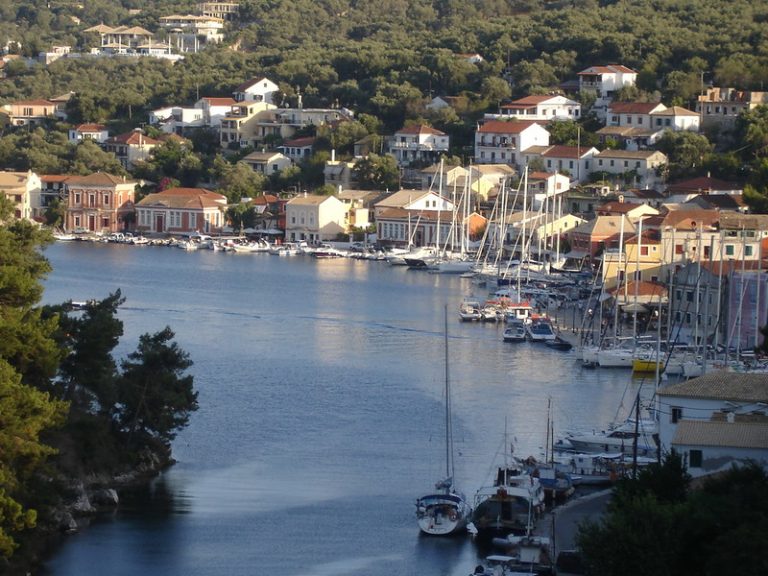
Potamos is the island’s main settlement and harbour.
The coast around the settlement provides the easiest opportunity for getting into the water without organising an excursion across the island.
It isn’t the reason to travel to Antikythera, but convenience matters.
Visitors staying in Potamos can explore the village and harbour and then find an appropriate nearby swimming spot when conditions permit.
Because this is an operating harbour, always pay attention to boats and local activity and choose a safe place away from vessel movements.
Best for: convenience and a quick swim close to accommodation.
Halara — A Quiet Coastal Alternative
Halara is another name visitors may encounter when exploring Antikythera’s coastline.
Like most places here, it should not be imagined as an organised tourist beach.
Its appeal lies in the undeveloped landscape, clear water and the possibility of finding considerably more solitude than on better-known Greek islands.
Access conditions can change, so asking locally before setting out is worthwhile.
On Antikythera, local knowledge is often more useful than an old online description of a track.
Best for: isolation and exploring beyond the obvious coastal stops.
The Real Attraction Is the Coastline
One of the mistakes that can be made when describing Antikythera is trying to turn every accessible piece of coast into a named tourist attraction.
That isn’t necessary.
The island’s strength is its wild coastline as a whole.
Rocky headlands, small bays and views across the open sea are encountered while travelling and walking around the island.
Some places are suitable for swimming. Others are better appreciated simply as landscapes.
Antikythera becomes more rewarding when visitors stop looking for a checklist of famous beaches and instead explore according to conditions on the day.
Explore the Coast by Boat
Seeing Antikythera from the water provides a completely different perspective.
A boat can reveal coves and sections of coastline that are difficult or impractical to reach overland.
This is particularly appealing because much of Antikythera’s coast is rugged rather than developed.
However, boat excursions should be treated as weather-dependent opportunities, not guaranteed activities.
The waters between Kythira and Crete are exposed, and conditions can change.
Ask locally after arriving whether any suitable boat excursion is operating during the visit.
Don’t Confuse the Antikythera Shipwreck with a Tourist Dive Site
The famous Antikythera shipwreck was discovered by sponge divers in 1900 and produced the Antikythera Mechanism, the Antikythera Youth and numerous other ancient objects.
Its importance can create the impression that visiting Antikythera means swimming or recreationally diving over the wreck.
That should not be assumed.
The archaeological wreck is a protected underwater site and has been the subject of specialist scientific excavation.
For an ordinary visitor, the shipwreck is part of the island’s extraordinary maritime story rather than another beach or casual snorkelling attraction.
Snorkelling Around Antikythera
Antikythera’s clear water and rocky coastline can make snorkelling worthwhile in suitable conditions.
Bring your own mask and snorkel if this is an important part of the trip. There isn’t the same extensive tourist infrastructure found on larger islands where equipment can easily be hired beside every beach.
Rocky seabeds can contain sea urchins, so water shoes can also be useful.
Most importantly, choose sheltered water and don’t underestimate wind or currents.
There Are No Organised Beach Clubs
Visitors looking for sunbeds, umbrellas, music and cocktails delivered to the beach will find much better options elsewhere in Greece.
Antikythera’s beaches are largely unorganised.
That means visitors should bring what they need:
- drinking water
- sun protection
- food or snacks
- suitable footwear
- swimming and snorkelling equipment
Shade can also be limited.
This simplicity is one of the island’s attractions, but only when visitors arrive prepared.
Take Water Seriously
Carrying water is particularly important on Antikythera.
There may be nowhere to buy a drink once away from Potamos, and the combination of summer sun, rugged terrain and walking can cause dehydration surprisingly quickly.
Don’t set off for a remote cove assuming a beach bar will appear at the end of the road.
It probably won’t.
Carry more water than seems necessary, especially when combining swimming with a walk.
Wind Determines the Best Beach
The “best beach in Antikythera” can change from one day to another.
Wind direction and sea conditions matter more here than online rankings.
A beautiful exposed cove may be unpleasant or unsafe when the sea is rough, while another part of the island can be relatively sheltered.
Ask people in Potamos where they would swim that day.
That simple question may produce a much better beach experience than following a fixed itinerary prepared months earlier.
Beaches Without a Car
Visitors staying in Potamos can enjoy the immediate coastline without a vehicle, but exploring more of Antikythera becomes substantially easier with transport.
Walking is possible, although distances need to be considered alongside heat and the island’s rugged terrain.
Don’t judge a walk purely by kilometres.
A relatively short distance under the Greek summer sun with little shade and nowhere to buy water can be much more demanding than expected.
Visitors without transport should ask their accommodation host about practical ways to reach Xiropotamos and other parts of the island.
Best Beach for Archaeology
There is no contest: Xiropotamos.
Visit the fortified ancient settlement above the bay before descending towards the coast.
Seeing the relationship between Kastro and its harbour makes the archaeology easier to understand.
The swim afterwards isn’t simply a convenient way to cool down. It completes the experience of a place whose history was fundamentally connected with the sea.
Best Place for Photography
Kamarela is the obvious choice.
Its rock formations and clear water produce the island’s most recognisable coastal images.
Early or later in the day can also provide more interesting light than the harsh middle of the afternoon.
But Antikythera offers photographic opportunities well beyond Kamarela.
The harbour at Potamos, empty roads, dry landscape, isolated churches and views towards the sea collectively capture the island more accurately than a single turquoise cove.
Best Beach for Solitude
Almost anywhere can qualify.
Antikythera receives so few visitors compared with Greece’s major islands that even its better-known swimming places can feel remarkably quiet.
Rather than travelling to an awkward location solely because it is described as “secret,” choose somewhere safe and suitable for the day’s weather.
On Antikythera, solitude isn’t something visitors generally need to work hard to find.
Are Antikythera’s Beaches Good for Families?
That depends on the family.
Families accustomed to undeveloped beaches and confident around rocky coastlines may enjoy Antikythera enormously.
Those looking for shallow organised beaches with lifeguards, toilets, restaurants, umbrellas and children’s activities should choose a more developed island.
The absence of facilities means parents need to be particularly well prepared with water, food and sun protection.
How Many Beach Days Do You Need?
Antikythera doesn’t really require dedicated beach days.
A better approach is to combine swimming with exploration.
Visit ancient Aigila and swim at Xiropotamos.
Explore another part of the island and stop at a cove when conditions are good.
See Kamarela while investigating the coastline.
Spend an hour in the water after a morning walk.
This fits Antikythera much better than spending seven hours lying on the same beach.
Are Antikythera’s Beaches Worth Visiting?
Yes, provided expectations are right.
Nobody should choose Antikythera because it has better beaches than Crete, Milos or the Ionian Islands.
Choose it because the beaches are part of a much rarer experience.
There are few people, almost no commercial development and an unusually strong connection between the landscape, archaeology and sea.
At Xiropotamos, the remains of an ancient maritime settlement rise above the water. At Kamarela, rock and sea create a tiny natural cove. Elsewhere, the coastline can feel almost empty.
Antikythera’s beaches are memorable because they still belong to Antikythera rather than to a tourism industry.
Explore More of Antikythera
Continue planning a visit with:
Things to Do in Antikythera — explore ancient Aigila, Potamos, the Apolytara Lighthouse and the story of the Antikythera Mechanism.
Best Places to Eat in Antikythera — discover the island’s tiny food scene, including local goat, fresh fish and thyme honey.
Best Places to Stay in Antikythera — understand the limited accommodation options and why Potamos is the most practical base.
Best Beaches in Kythira — explore the much larger neighbouring island’s more extensive coastline.